We Restore Dental Implants in Berea, Ohio — Natural-Looking, Long-Lasting Results
Implant crowns that look, feel, and function like natural teeth — crafted to match your smile and built to last.
Losing a tooth affects more than just your appearance. It changes how you eat, how you speak, and — over time — how your jawbone holds its shape. Dental implants are the most permanent, natural-feeling solution available for missing teeth, and at our Berea dental office, Dr. Kleem walks every patient through the process with clear explanations and no pressure.
How Dental Implants Work
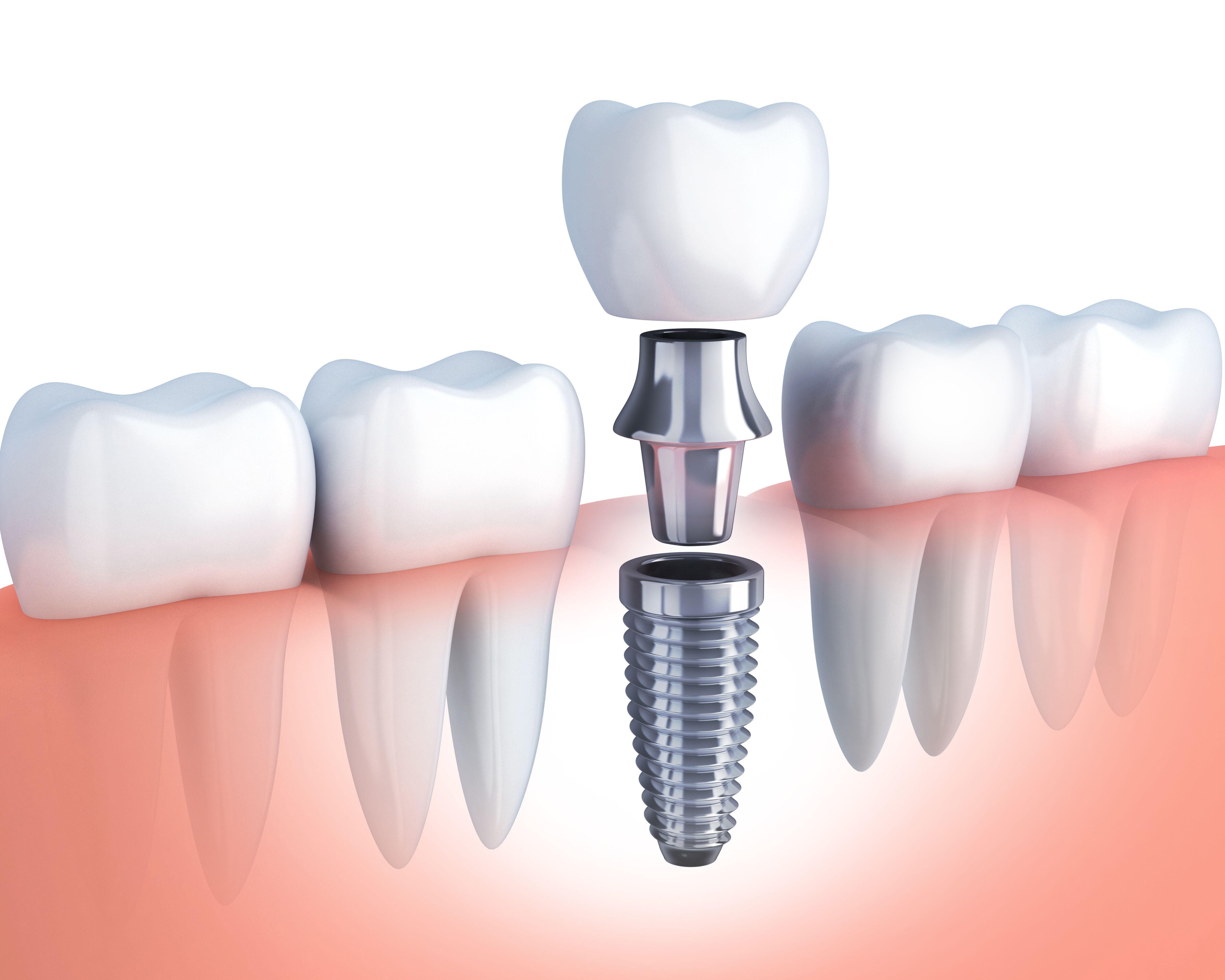
A dental implant is a three-part restoration that replaces a missing tooth from the root up:
The Implant Post
A small titanium screw surgically placed into the jawbone. It acts as a replacement root and, over time, fuses with the bone through a process called osseointegration.
The Abutment
A small connector piece that attaches to the top of the implant post once healing is complete. It creates the foundation that the crown will attach to.
The Crown
A custom ceramic crown placed on the abutment. It is the only visible part of the implant and is designed to match the color and shape of your natural teeth.
The key to an implant's long-term success is osseointegration — the biological process by which the titanium post bonds directly to the surrounding jawbone. Titanium is biocompatible, meaning the body does not reject it; instead, bone cells grow around and into the surface of the post, creating a secure, stable anchor. This process is what makes implants feel so natural and allows them to withstand the full forces of normal chewing.
Osseointegration takes several months to complete, which is why the overall implant process is spread across multiple appointments over a period of 3–6 months. However, the actual time you spend in the chair is far less — most of the timeline is simply healing time.
Types of Implants We Offer
Dental implant technology has advanced to the point where implants can be used to replace anything from a single missing tooth to an entire arch. Dr. Kleem will recommend the right solution based on your specific situation.
Single Tooth Implant
The most common type. A single implant post supports one crown and replaces one missing tooth. Because the implant stands on its own, no adjacent teeth need to be altered or involved — unlike a traditional dental bridge, which requires crowning the neighboring teeth to support the restoration.
Implant-Supported Bridge
When two or more teeth are missing in a row, implants can anchor a bridge without touching the surrounding natural teeth. Two implant posts are placed on either end of the gap to support a multi-tooth bridge across the space. This is a strong, permanent solution that preserves the health of adjacent teeth.
Implant-Supported Dentures
For patients missing most or all of their teeth, implant-supported dentures offer a dramatically more stable alternative to traditional removable dentures. A small number of strategically placed implants anchor a full arch of teeth, eliminating the slipping, clicking, and dietary restrictions that traditional dentures often cause.
Are You a Candidate for Dental Implants?
The great news is that most healthy adults with one or more missing teeth are candidates for dental implants. General health, gum health, and bone density are the three most important factors Dr. Kleem evaluates during your consultation.
Adequate jawbone is essential because the implant post needs sufficient bone to anchor into and fuse with. Bone loss is common after tooth loss — the jawbone begins to shrink within the first year of losing a tooth because it no longer has a root to stimulate it. This is actually one of the most important reasons not to wait when considering an implant: the sooner it's placed after a tooth is lost, the more bone is typically available.
For patients who have already experienced significant bone loss, bone grafting may be an option. A bone graft adds volume to the jaw to create a suitable foundation for an implant. Dr. Kleem will evaluate your bone structure using imaging during your consultation and will be upfront about whether grafting might be necessary in your case.
Conditions like uncontrolled diabetes or active gum disease may need to be managed before implant placement, but they do not automatically disqualify a patient. Dr. Kleem takes a thorough, individualized approach to every consultation and will give you an honest assessment of your options.
The best way to find out if implants are right for you is to schedule a consultation with Dr. Kleem. Call our Berea office at (440) 239-8389 or book online to get started. We'll take a look at your full situation and explain exactly what's involved — with no obligation to commit on the spot.
Dental Implant FAQs
Answers to the questions patients ask most often about implants.